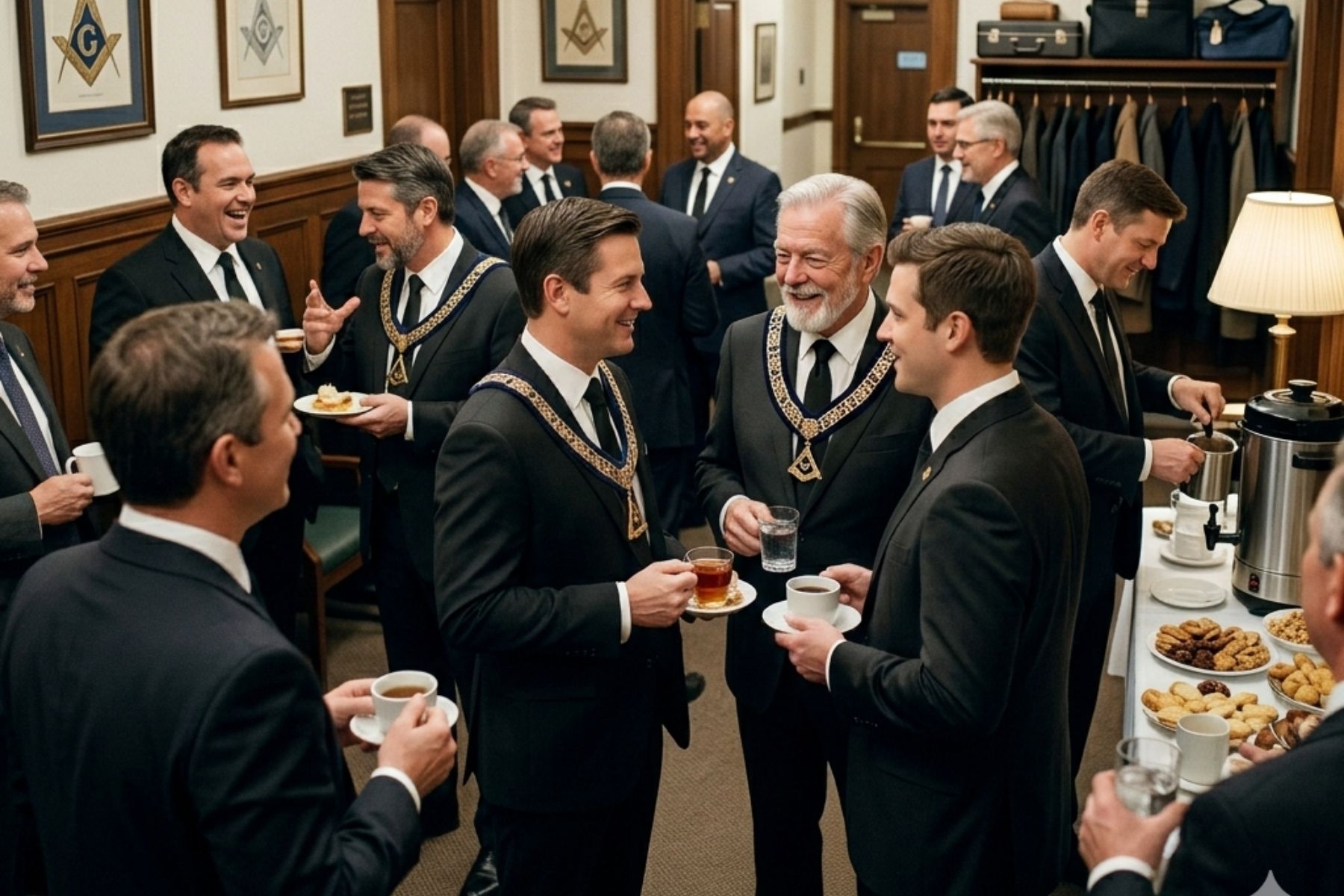
In discussions about Freemasonry, much attention is often given to history, symbolism, ritual, and tradition. These are all important. Yet one of the most enduring and personally meaningful aspects of the Masonic experience is something more human and immediate: fellowship.
Fellowship lies at the heart of Freemasonry. It is not an optional side benefit, nor is it merely a social convenience. It is one of the key ways in which Masonic principles are lived out in practice. In an age marked by increasing isolation, distraction, and fragmentation, the role of fellowship in Freemasonry remains as relevant as ever.
What Fellowship Means in a Masonic Context
Fellowship in Freemasonry goes beyond casual acquaintance. It refers to a sense of mutual respect, shared commitment, and supportive connection among members. It is built on common values and strengthened through regular interaction, shared responsibilities, and collective participation in meaningful work.
This kind of fellowship is grounded in principles such as:
- Brotherly regard
- Respectful conduct
- Shared moral purpose
- Trust and reliability
- Willingness to support one another
It is not based on personal gain or social convenience alone. Instead, it grows out of a shared commitment to becoming better individuals and contributing positively to the lives of others.
Why Fellowship Has Always Been Important
Freemasonry has long understood that growth is not achieved in isolation. While self-reflection is certainly important, character is also shaped through relationships. Fellowship provides a setting in which values such as patience, kindness, responsibility, humility, and loyalty can be practised consistently.
Historically, Masonic bodies offered members a space where men from different professions, backgrounds, and experiences could meet on common ground. In that setting, distinctions of status mattered less than shared principles and conduct.
That remains significant today. In a world where people are often divided by ideology, profession, or social identity, fellowship rooted in mutual respect offers something increasingly rare and valuable.
Fellowship as a Source of Belonging
One of the most meaningful functions of fellowship is that it provides a sense of belonging. Many people today experience disconnection, even while surrounded by constant communication and digital interaction. Freemasonry offers a different type of connection—one built on presence, participation, and continuity.
When fellowship is healthy, members know they are part of something larger than themselves. They are not merely attending meetings or observing tradition. They are participating in a community of shared purpose.
That sense of belonging can be especially powerful during periods of personal challenge, transition, or uncertainty. Knowing that one is surrounded by others who value integrity, discretion, and mutual support can make a lasting difference.
Shared Learning and Growth
Fellowship also strengthens the educational side of Freemasonry. Masonic teaching is not absorbed only through reading or observation. It is often deepened through conversation, example, and discussion with others who have reflected on the same principles.
Within a fellowship-based environment, members can:
- Learn from those with more experience
- Ask thoughtful questions
- Exchange perspectives respectfully
- Reflect together on moral and symbolic lessons
- Encourage one another in continued growth
This type of shared learning creates continuity across generations. Traditions are not simply maintained in writing; they are handed down through example and participation.
Fellowship and Accountability
Another important dimension of fellowship is accountability. In a healthy Masonic environment, fellowship does not mean avoiding difficult truths or overlooking poor conduct. Rather, it creates a moral framework in which members are reminded—gently but clearly—of the standards they have committed to uphold.
When people care about one another and share common principles, they are more likely to encourage integrity in practice. Fellowship becomes a stabilising influence. It helps prevent individualism from turning into isolation and tradition from becoming merely formal.
In this sense, fellowship supports the practical side of moral development. It reminds members that values are not meant to remain abstract. They are meant to shape behaviour, relationships, and responsibilities.
Service and Community
Fellowship within Freemasonry often extends beyond internal relationships and expresses itself through service. Lodges and related bodies have long been involved in charitable efforts, community support, and acts of assistance.
This outward dimension matters because it shows that fellowship is not only inward-looking. It is not a closed circle existing only for itself. When healthy, Masonic fellowship encourages members to act with generosity and responsibility toward the wider community.
Shared service also strengthens fellowship itself. Working together in support of meaningful causes reinforces trust, purpose, and mutual respect.
Why Fellowship Still Matters Today
The modern world offers many forms of connection, but not all of them create real community. Quick communication does not always produce trust. Social visibility does not always create belonging. Group identity does not always lead to mutual respect.
That is why fellowship in Freemasonry still matters.
It matters because it provides:
Stability
Regular interaction with others who value principle and continuity creates a sense of steadiness.
Meaningful connection
Freemasonry offers relationships that are rooted in shared commitments rather than convenience alone.
Intergenerational continuity
Older and newer members can learn from one another in ways that preserve both tradition and relevance.
A setting for character development
Fellowship gives members real opportunities to practise the virtues they profess.
A counterbalance to modern isolation
It creates spaces where presence, attention, and responsibility still matter.
In these ways, fellowship remains not only relevant but deeply necessary.
Challenges to Fellowship
Of course, fellowship does not strengthen itself automatically. It requires effort, sincerity, and care. Modern life presents challenges such as:
- Busy schedules
- Geographic distance
- Reduced participation
- Overreliance on digital interaction
- Generational misunderstandings
For fellowship to remain strong, members and organisations must be intentional. They must create environments that are welcoming, respectful, and meaningful. They must also be willing to invest time in one another rather than treating fellowship as secondary to structure or ceremony.
Building Stronger Fellowship Today
There are practical ways Masonic communities can support stronger fellowship in the present day:
- Encourage active participation rather than passive attendance
- Foster mentorship between experienced and newer members
- Create opportunities for discussion, study, and informal conversation
- Support charitable and community projects that unite members in action
- Emphasise kindness, courtesy, and respect in all interactions
When these practices are present, fellowship becomes stronger and more genuine.
Final Thoughts
Freemasonry is often appreciated for its history, symbolism, and moral teachings, but fellowship is one of the ways those teachings become real. It gives members a place to belong, to learn, to serve, and to grow alongside others who share meaningful commitments.
That is why fellowship still matters today. In a time when many people are searching for deeper connection and steadier forms of community, the Masonic model of respectful, principled fellowship remains both relevant and valuable.
At its best, fellowship in Freemasonry is not simply about being together. It is about helping one another live with greater integrity, purpose, and mutual regard—and that is something worth preserving. The role of fellowship in Freemasonry has always been at the heart of the organisation, and it remains just as relevant today as it was centuries ago. At its core, Freemasonry is built on the idea of connection—bringing people together from different backgrounds, professions, and walks of life to share a sense of purpose, trust, and mutual respect. This fellowship goes beyond casual association; it is rooted in shared values, personal development, and a commitment to supporting one another both within and outside the lodge.
In today’s fast-paced and often disconnected world, this sense of belonging carries even more significance. Many members find that the relationships formed through Freemasonry provide stability, guidance, and genuine friendship. Regular meetings, shared rituals, and community involvement help reinforce these bonds, creating a strong network of support that extends well beyond formal gatherings.
The idea of fellowship also connects closely with tradition and craftsmanship. Just as Freemasonry values patience, precision, and integrity in personal conduct, these same principles can be seen in enduring forms of craftsmanship such as Philadelphia Masonry, where skilled work in brick, stone, and concrete reflects a long-standing commitment to quality and structure. In both cases, there is an emphasis on building something lasting—whether it is character, relationships, or physical spaces.
Ultimately, fellowship in Freemasonry still matters today because it offers something increasingly rare: meaningful human connection. It encourages members to slow down, engage in thoughtful conversation, and support one another through life’s challenges and successes. In doing so, it preserves a tradition of brotherhood that continues to feel relevant in modern society.
That enduring sense of unity and shared purpose is what keeps Freemasonry strong, reminding members that true value is often found not in material outcomes, but in the relationships built along the way.
