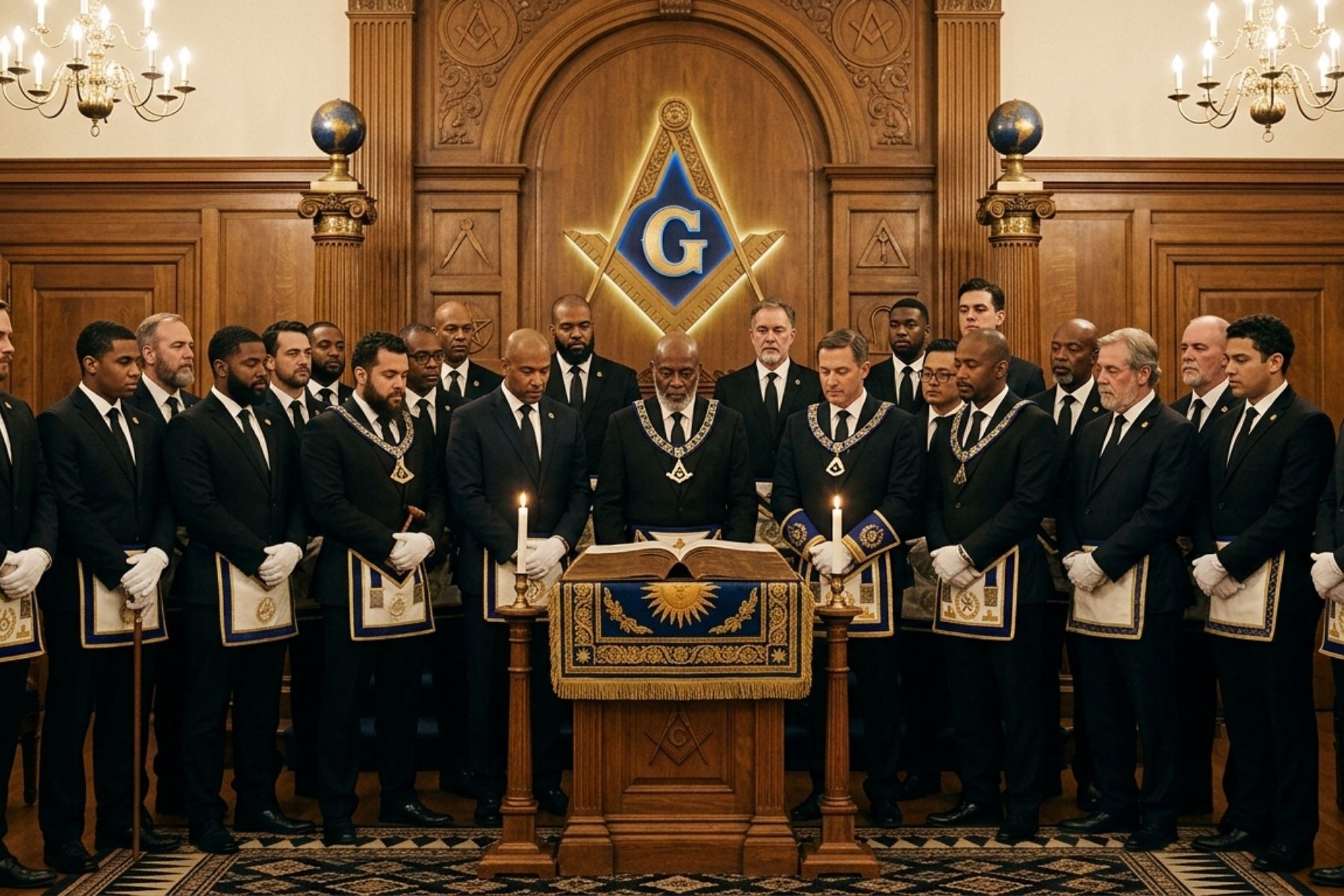
One of the most compelling aspects of Freemasonry is its use of symbolism. Rather than teaching solely through direct explanation, Masonry often communicates its lessons through images, objects, settings, and dramatic representations. Council Masonry is especially rich in symbolism, and much of its meaning is conveyed through ideas connected to secrecy, preservation, faithfulness, and hidden wisdom.
For those new to the subject, the symbols of Council Masonry may seem complex at first. Yet when approached carefully and respectfully, they reveal a great deal about the values and teachings of the Cryptic Rite.
This article explores several key symbols associated with Council Masonry and what they generally represent.
Why Symbolism Matters in Council Masonry
Symbolism is central to Masonic learning because it engages both the mind and the imagination. A symbol can communicate multiple layers of meaning at once. It invites reflection, encourages interpretation, and gives members a way to revisit important lessons over time.
In Council Masonry, symbols often point to deeper ideas such as:
- Safeguarding truth
- Acting faithfully under pressure
- Preserving wisdom for future generations
- Remaining steadfast in service and duty
- Recognising the value of hidden or unseen work
Rather than being decorative, these symbols function as teaching tools. They help frame moral and spiritual concepts in a memorable and enduring way.
The Crypt or Vault
Perhaps the most recognisable image associated with Council Masonry is the crypt or vaulted chamber. This symbol is central to the identity of the Cryptic Rite.
What it represents
The crypt suggests hidden knowledge, preservation, and protection. It is not merely a secret place for the sake of secrecy. Instead, it symbolises the careful guarding of things that are sacred, valuable, or entrusted to responsible hands.
On a broader level, the vault may also represent the inner life of the individual. It points to the idea that some truths are not immediately visible and must be approached with patience, reverence, and preparation.
The crypt teaches that not everything of worth is displayed openly. Some things must be preserved quietly until the proper time for understanding or use.
The Keystone
The keystone is another important symbol in Masonic teaching more broadly, and it carries significance in related York Rite traditions.
What it represents
Architecturally, the keystone holds an arch together. Symbolically, it represents support, stability, and completion. It can also stand for a truth or principle that brings order and coherence to what would otherwise remain incomplete.
In a Council context, the keystone can suggest the importance of foundational wisdom and the idea that certain truths hold everything else in place. Without such principles, structures—whether moral, social, or spiritual—are weakened.
The lesson here is that character, faithfulness, and integrity act as the keystones of a meaningful life.
The Triangle
The triangle or triangular form appears in various Masonic settings and is often associated with harmony, balance, and divine order.
What it represents
The triangle is one of the most stable geometric forms, and its symbolism often points to completeness and strength. In a moral sense, it can suggest the proper relationship between thought, word, and action. In a spiritual sense, it may point to higher truth, order, or unity.
Within Council Masonry, the triangle can serve as a reminder that sound judgment and upright living require balance. It calls attention to the idea that a well-ordered life is built on stable principles rather than impulse or convenience.
The Number Nine
Certain numbers carry symbolic meaning in Masonic traditions, and the number nine is often associated with completeness, attainment, or fulfilment.
What it represents
In symbolic systems, numbers often serve to reinforce structure and meaning. The number nine may suggest maturity, culmination, or the completion of a process of preparation.
In the context of Council Masonry, it can be interpreted as pointing toward the careful unfolding of purpose and the idea that wisdom often emerges through stages rather than all at once.
This reminds members that meaningful understanding is developed patiently and that progress is often both gradual and ordered.
The Sword
The sword appears in many ceremonial traditions and carries both practical and symbolic meaning.
What it represents
Symbolically, the sword may stand for justice, vigilance, honour, and defence of what is right. In Council Masonry, it can also point to duty and readiness. It reminds members of the need to protect what has been entrusted to them, whether that means truth, principle, or responsibility.
The sword is not merely a symbol of force. In a moral framework, it represents disciplined strength guided by wisdom and integrity.
The Veil or Hidden Chamber
The idea of a veil, curtain, or hidden chamber appears in symbolic traditions as a representation of separation between the visible and the deeper truth beyond it.
What it represents
This symbol encourages humility. It reminds members that full understanding is not always immediate and that deeper insight often requires preparation, discipline, and patience.
The veil also suggests that some truths must be approached with reverence. The lesson is not about exclusion for its own sake, but about recognising that wisdom has value and should be treated accordingly.
In personal terms, it can represent the difference between outward appearance and inward understanding.
The Trowel and Working Tools
Although more commonly associated with earlier Masonic teaching, working tools remain important symbols throughout the wider tradition.
What they represent
Tools such as the trowel point to constructive effort, unity, and the work of building—both in the literal and symbolic sense. In Council Masonry, these symbols reinforce the idea that moral and spiritual development requires labour, discipline, and purpose.
They also suggest that preserving and strengthening what is good is an active responsibility, not a passive condition.
Light and Darkness
The contrast between light and darkness appears frequently in Masonic symbolism and carries profound meaning across all levels of the craft.
What it represents
Darkness often symbolises uncertainty, ignorance, or hiddenness, while light points to truth, knowledge, and understanding. In Council Masonry, this contrast is especially fitting because much of its teaching concerns what is concealed, preserved, and eventually brought into fuller understanding.
The movement from darkness to light reflects the Masonic pursuit of wisdom. It encourages members to continue seeking greater clarity in thought, conduct, and purpose.
Why These Symbols Still Matter
Some may wonder whether traditional symbols still have meaning in the modern world. The answer is yes, particularly when they are understood as tools for reflection rather than merely historical curiosities.
The symbols of Council Masonry continue to matter because they speak to timeless concerns:
- How to act with integrity
- How to preserve what is valuable
- How to remain faithful in difficult circumstances
- How to distinguish surface appearances from deeper truths
- How to live thoughtfully and responsibly
These are not outdated concerns. They remain relevant in personal, professional, and civic life.
Final Thoughts
The symbols of Council Masonry are rich, layered, and deeply purposeful. They are not meant to confuse, but to instruct through reflection. The crypt, the keystone, the triangle, the sword, and other symbolic elements all point toward enduring lessons about fidelity, wisdom, discretion, and moral responsibility.
For those interested in Council Masonry, understanding its symbols provides a valuable entry point. It reveals that the Cryptic Rite is not simply about ceremony or tradition alone. It is about preserving truth, cultivating character, and learning to appreciate the deeper meanings that often lie beneath the surface.
